With this project, we are going back to basics. I’ll be using basic logic gates and common integrated circuits to build the system one piece at a time. It draws inspiration from 1980s computers and focuses on the fundamentals: the ALU, control unit, registers, memory, and the connections that make them work together.
The presentation introduces UiO’s new analytics engine, DataOPS, which is used for logging, monitoring, and security analytics. It begins with a journey back to the 1980s, a time of significant changes in society, politics, the music industry, and especially the computer world, marking the era when “ordinary” people had the opportunity to own a computer at home, along with all the associated benefits and threats.
In this article I am going to explain how I got control of my UPS (Uninterruptible Power Supply) installation using NUT via PFSense+ so I can monitor and manage the UPS from the main router in my HomeLab. In addition I will show how I have configured Zabbix with a new NUT template for monitoring, alarm generation and long term metrics for my UPS.
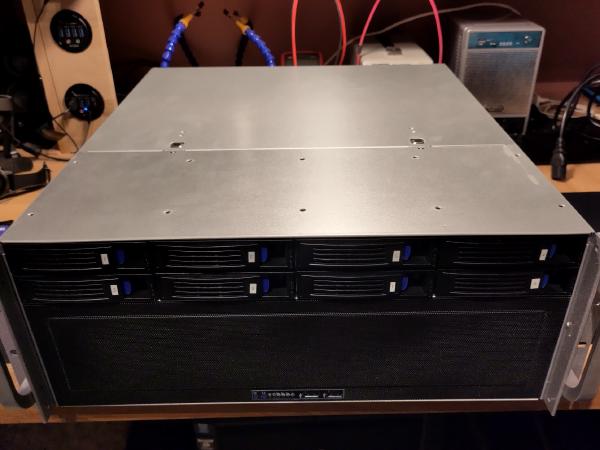
The Linux KVM server is one of the central components in the HomeLab. The server was going to run KVM[^k] and all the virtual machines in my HomeLab so I spent some time trying to find out a good balance between number og CPU cores, memory size and fast storage before I decided what I needed.
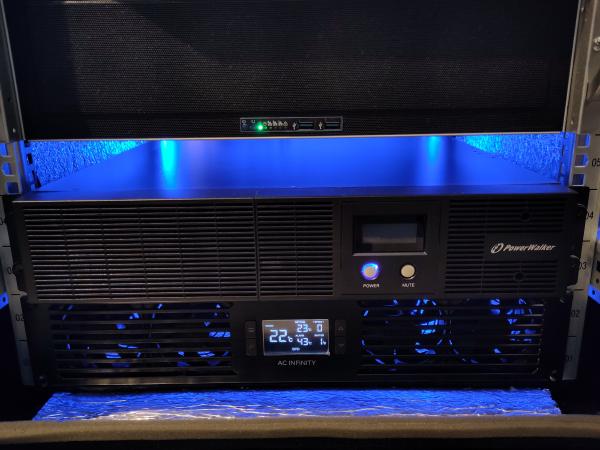
One of the components one should have in a HomeLab is an UPS (Uninterruptible Power Supply). An UPS will protect your HomeLab when the input power source or mains power fails, giving you time to save your data/work and shutdown your HomeLab without data lost or data corruption.
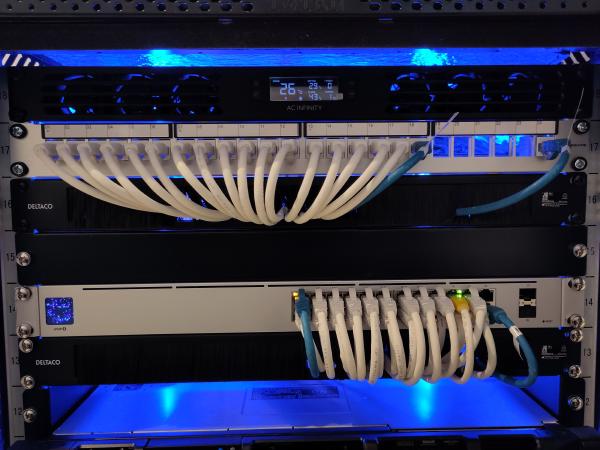
A 19-inch rack is a standardized frame or enclosure for mounting multiple electronic equipment modules. Each module has a front panel that is 19 inches (482.6 mm) wide.
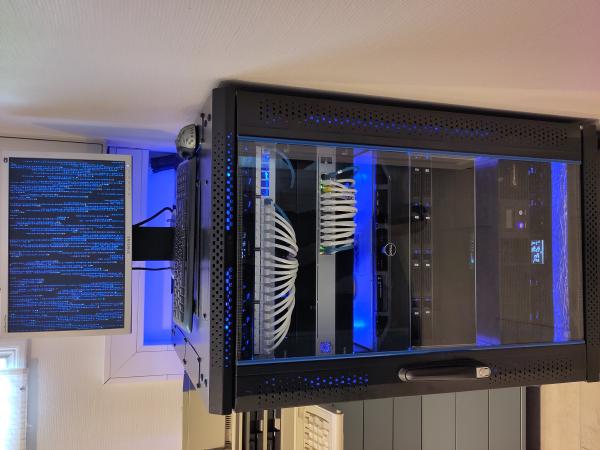
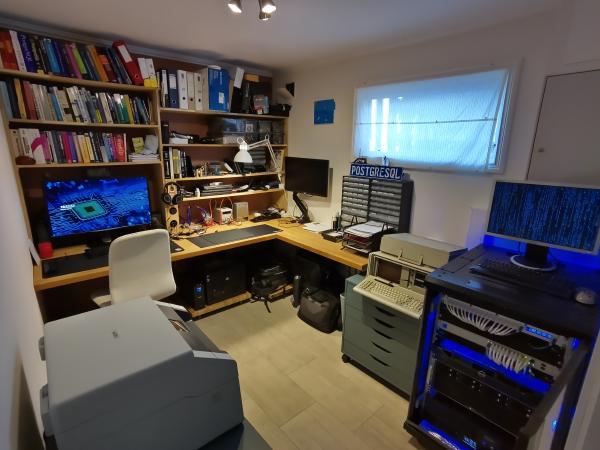
I needed a place to have the HomeLab and my own Home Office/Lab. After all, they sent us to work from home and couldn’t go to the office or school for months because of the COVID pandemic.
Will OpenAI/Whisper recognized my “Andalusian accent” when I speak Spanish and transcribe the audio to text without problems? I had to use 0.032759 kWh of energi to find this out.
Not long ago I got some nice second-hand SAS drives that I could use with my home server. I didn’t have a SAS controller that I could use with these drives at that time, so I started looking for one. I didn’t want to spend too much money and the specifications I wanted were not very advanced.
After some investigation I decided to purchase a Broadcom MegaRaid SAS 9341-8i controller. This controller is a bit old but it had the functionality I was looking for at an affordable price.
Have you ever wondered how to manage billions of logs and metrics from thousands of devices in your infrastructure? If you need high-availability and a resilient and stable system to process your data this is the tutorial for you.
After several weeks of intense testing, fixing configuration problems, re-indexing data and experiencing problems when upgrading our Kibana indices, we managed to upgrade our 36 Kibana instances and our Elasticsearch cluster in production from version 5.6.16 to 6.7.1 a couple of weeks ago.
I am writing this article with contradictory feelings, Am I having a bad day on top of The Oracle at Google not giving me answers, or is the documentation of the Keepalived software totally outdated and old?
If you have to administrate an Elasticsearch cluster, there are some common maintenance tasks that you will have to run to keep your data growth under control, backup your indexes and keep the cluster updated.
“CEREBRO” is an Elasticsearch web admin tool built using Scala, Play Framework, AngularJS and Bootstrap. It is equivalent to KOPF with some extra new features.
We started using Zabbix to monitor the IT infrastructure at The University of Oslo in 2014. During all this time we have been running all our Zabbix servers on VMware virtual servers with an acceptable level of performance. This situation changed some months ago when the VMvare+Storage we were using did not have more available resources for us to grow and it was slowing down the future development of our monitoring system.
A case study showing the problems we have resolved with Zabbix and the challenges we had when we implemented Zabbix as the main monitoring tool at the University of Oslo.
A short presentation about why and how we are using data analysis of log information at the University of Oslo with elasticsearch, logstash and kibana.
Zabbix-cli is a tool for managing some administration tasks in monitoring systems running Zabbix. It is a terminal client written in Python that uses the Zabbix-API to connect to your Zabbix installation.